
Best Business VPN & Zero Trust Access Solutions for SMBs
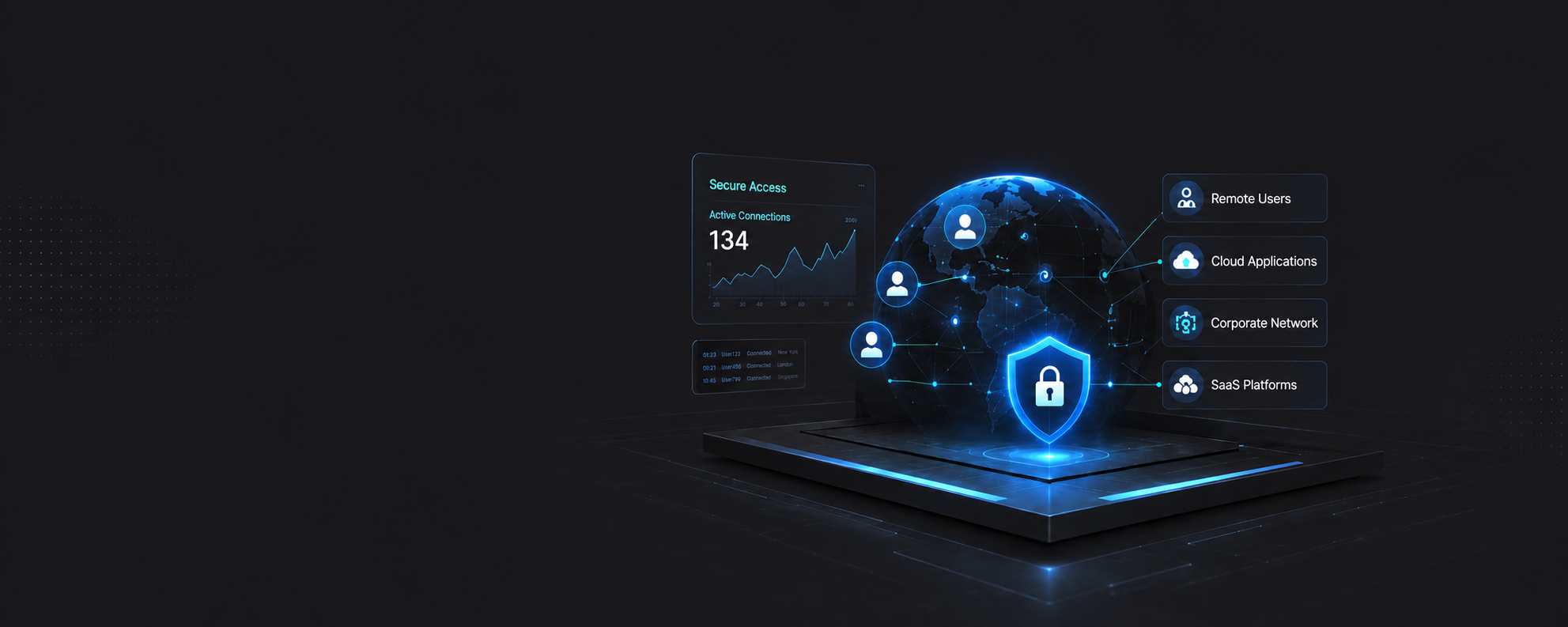
Choosing the right business VPN is no longer just about creating an encrypted connection. Modern businesses need secure access, identity controls, device visibility, cloud application protection, and simple management for remote and hybrid teams.
This review compares five leading business VPN and Zero Trust access solutions: NordLayer, Twingate, Perimeter 81 / Check Point Harmony SASE, Cloudflare Zero Trust, and OpenVPN Access Server.
Our focus is practical: which solution is best for SMBs, remote teams, cloud-first businesses, technical teams, and organizations looking for stronger security without adding unnecessary complexity.

Independent Reviews

Expert Analysis

SMB Focused

Updated May 2026
Explore Top Business VPN Solutions

NordLayer
Best Overall for SMBs

Twingate
Best for Zero Trust

Perimeter 81
Best for SASE & Secure Access

Cloudflare Zero Trust
Best for Advanced Security

OpenVPN Access
Best for Self-Hosted VPN
Table of Contents
- Overview
- NordLayer Review
- Capabilities in Depth
- Best Use Cases
- Key Strengths
- Considerations
- Overall Verdict
Overview
Business VPN platforms have evolved significantly. Traditional VPNs mainly focused on creating encrypted tunnels between users and networks. Today, leading solutions combine VPN, Zero Trust Network Access, identity-aware access, device controls, logging, and cloud-first security features.
For SMBs, the best solution is usually not the most complex one. It is the platform that improves security, is easy to deploy, fits the team’s technical maturity, and can scale as the business grows.
NordLayer is a strong fit for SMBs that want a practical and easy-to-manage platform. Twingate is better suited for teams that want a modern Zero Trust access model. Perimeter 81, now part of Check Point’s Harmony SASE portfolio, offers a broader secure access service edge approach. Cloudflare Zero Trust is powerful for businesses that want advanced controls and are comfortable with a broader security ecosystem. OpenVPN Access Server remains relevant for technical teams that want infrastructure control and a cost-conscious deployment model.
1. NordLayer Review
NordLayer is a business-focused network security platform designed for companies that need secure remote access, business VPN capabilities, and Zero Trust-aligned access controls without enterprise-level complexity.
It is especially relevant for startups, SMBs, and remote teams that want a clean management interface, fast deployment, and a practical way to secure users connecting from different locations. NordLayer positions itself around simplified enterprise-grade security, threat blocking, and modern network access management.
Capabilities in Depth
NordLayer provides secure remote access for employees and distributed teams. It helps businesses manage who can access company resources, where they can connect from, and how access should be controlled.
Its capabilities typically include business VPN access, user and team management, access policies, identity-based controls, multi-factor authentication support, dedicated gateways, device posture checks, and activity visibility. The platform is designed to reduce the burden on smaller IT teams while still giving businesses stronger control over remote access.
NordLayer also aligns well with Zero Trust principles. A Zero Trust approach means users, devices, and applications should not receive automatic access. Every connection should be verified before access is granted.
Best Use Cases
NordLayer is best for businesses that want a secure access platform they can deploy quickly. It works well for remote teams, hybrid workforces, startups, SaaS companies, professional services firms, and SMBs that do not want to manage complex infrastructure.
It is also suitable for companies that need to improve remote access security but do not yet have a large internal cybersecurity team.
Key Strengths
NordLayer’s biggest strength is simplicity. It gives businesses a practical way to improve secure remote access without forcing them into a highly complex enterprise security architecture.
It is also strong for SMB adoption because the platform is easier to understand than many advanced SASE or ZTNA tools. The user experience, centralized management, and security-first positioning make it a good fit for organizations looking for a balance between protection, usability, and scalability.
Considerations
NordLayer may not be the best fit for very large enterprises that require highly customized network architecture, complex policy models, or deep integration into mature enterprise security operations.
Costs can also grow as user count increases, so businesses should evaluate pricing based on team size, growth plans, and required features.
Overall Verdict
NordLayer is the best overall starting point for most SMBs and remote teams. It provides the right balance of security, usability, and business practicality.
For SecureMinds, NordLayer should be positioned as the primary recommendation for businesses that want a modern business VPN and Zero Trust-aligned secure access solution without operational complexity.
2. Twingate Review
Twingate is a Zero Trust Network Access platform designed to replace traditional VPN-style access with identity-aware, application-level access controls. Instead of giving users broad access to a network, Twingate helps businesses control access to specific resources based on identity and policy.
Twingate emphasizes reducing the attack surface while enabling fast remote access for modern teams. Its Zero Trust product focuses on remote access backed by security controls, visibility, and resource-level access management.
Capabilities in Depth
Twingate works differently from a classic VPN. Traditional VPNs often connect users into a network. Twingate focuses on connecting authorized users to specific resources.
This model is valuable because it reduces unnecessary exposure. Users do not need broad network access if they only require access to one application, server, or environment.
Twingate is particularly strong for cloud-native environments, developer access, internal applications, and organizations adopting least-privilege access. ZTNA is network-agnostic and can create direct connections between users and company resources whether those resources are on-premises or in the cloud.
Best Use Cases
Twingate is best for SaaS companies, technology teams, cloud-first businesses, developer environments, and organizations that want to move away from traditional VPN architecture.
It is also a strong choice for businesses that want to reduce lateral movement risk by limiting access to only the specific resources users need.
Key Strengths
Twingate’s main strength is its modern Zero Trust architecture. It offers granular access control, strong identity alignment, reduced network exposure, and better control over internal application access.
It is especially useful for technical teams that understand application access patterns and want to avoid the risks of broad VPN access.
Considerations
Twingate may require more planning than a simple business VPN. Organizations need to understand resources, access policies, user groups, and identity integration.
For very small businesses looking for a simple “turn on and use” VPN experience, Twingate may feel more technical than NordLayer.
Overall Verdict
Twingate is one of the best options for businesses serious about Zero Trust access. It is less of a traditional business VPN and more of a modern secure access architecture.
It is a strong recommendation for cloud-native and technical teams, but may not be the easiest first step for non-technical SMBs.
3. Perimeter 81 / Check Point Harmony SASE Review
Perimeter 81 became part of Check Point and is now aligned with the Harmony SASE offering. This matters because the platform has moved from being a standalone secure access provider into a broader secure access service edge ecosystem.
Check Point describes Harmony SASE as a cloud-based SASE platform that helps secure networks and resources with capabilities such as web and DNS filtering, malware protection, privacy controls, and secure access services.
Capabilities in Depth
Perimeter 81 / Harmony SASE is designed to support secure access, cloud security, network protection, and policy-based control across distributed users and resources.
The platform is relevant for businesses that want more than a VPN. It can support a broader secure access model that combines private application access, internet security, DNS filtering, web protection, and cloud-based management.
This makes it attractive for businesses that are moving toward a more complete SASE or SSE strategy rather than only solving remote connectivity.
Best Use Cases
This solution is best for growing SMBs, mid-sized companies, and organizations that want a broader secure access and network security platform.
It is suitable for companies looking to consolidate remote access, web security, DNS protection, and cloud-delivered controls under one platform.
Key Strengths
The biggest strength is its broader security coverage. It is not limited to simple remote access. The Check Point ecosystem can provide stronger security depth for businesses that want an integrated security approach.
It is also appealing for organizations that prefer vendor consolidation and want secure access linked to other network and cloud security controls.
Considerations
The broader platform may be more than some small businesses need. It may also require more time to evaluate, configure, and align with existing security policies.
Another consideration is naming and transition clarity. Since Perimeter 81 has been integrated into Check Point Harmony SASE, some users may still see older Perimeter 81 references while the product direction continues under the Check Point SASE portfolio.
Overall Verdict
Perimeter 81 / Check Point Harmony SASE is a strong choice for organizations looking beyond a simple VPN and toward a broader secure access platform.
For SMBs that want quick simplicity, NordLayer may be easier. For businesses looking for broader SASE capabilities, Harmony SASE deserves serious consideration.
4. Cloudflare Zero Trust Review
Cloudflare Zero Trust is part of Cloudflare One, Cloudflare’s broader SASE and Zero Trust platform. It is designed to help businesses secure access to internal applications, SaaS tools, internet browsing, and corporate resources.
Cloudflare Access provides ZTNA controls and is part of the wider Cloudflare Zero Trust platform. Cloudflare also offers both free and paid Zero Trust plans, with features depending on plan type.
Capabilities in Depth
Cloudflare Zero Trust is powerful because it sits inside a much larger global security and network ecosystem. It supports application access, DNS filtering, HTTP filtering, identity-based controls, and broader Zero Trust capabilities.
For businesses already using Cloudflare for DNS, CDN, application protection, or web infrastructure, Cloudflare Zero Trust can be a strong extension of the same ecosystem.
Cloudflare’s Zero Trust model is built around strict identity verification rather than trusting users by default, even if they are already inside a network perimeter.
Best Use Cases
Cloudflare Zero Trust is best for technically mature SMBs, mid-market organizations, SaaS companies, developers, and companies already using Cloudflare services.
It is particularly strong for organizations that want to protect internal applications, secure internet access, control SaaS access, and build toward a broader SASE strategy.
Key Strengths
Cloudflare’s key strength is ecosystem scale. It combines Zero Trust access with one of the largest global networks, making it attractive for performance-sensitive and security-conscious organizations.
It also has a strong free entry point for small teams or proof-of-concept testing, although advanced capabilities depend on the selected plan.
Considerations
Cloudflare Zero Trust can feel complex for smaller businesses without technical expertise. Configuration, policies, identity integration, and architecture planning require more understanding than a simple business VPN.
It is powerful, but it may be too advanced as a first secure access tool for a non-technical SMB.
Overall Verdict
Cloudflare Zero Trust is one of the strongest options for businesses that want advanced security, ecosystem depth, and scalable Zero Trust architecture.
It is not the simplest option, but it is one of the most powerful for organizations that have the technical maturity to use it properly.
5. OpenVPN Access Server Review
OpenVPN Access Server is a business VPN solution built around the widely known OpenVPN protocol. It remains popular with technical teams that want more control over deployment, infrastructure, and configuration.
Unlike cloud-native ZTNA-first platforms, OpenVPN Access Server is often selected by organizations that are comfortable managing VPN infrastructure directly.
Capabilities in Depth
OpenVPN Access Server provides secure VPN access for remote users and site connectivity. It is commonly used when organizations want control over where the VPN server runs, how users connect, and how the environment is configured.
It can be deployed in cloud environments or on business-controlled infrastructure, making it flexible for technical teams.
Best Use Cases
OpenVPN Access Server is best for technical teams, infrastructure-focused businesses, self-hosted environments, and organizations that need a lower-cost VPN approach with more direct control.
It can also work well where companies already have IT administrators familiar with VPN operations and network-level access controls.
Key Strengths
The biggest strength is control. Businesses can decide where and how the VPN is deployed, how users authenticate, and how the network is exposed.
It is also generally more cost-conscious compared to many cloud-native secure access platforms.
Considerations
OpenVPN Access Server requires more operational responsibility. Businesses must manage deployment, configuration, updates, monitoring, security hardening, and troubleshooting.
It may also lack the same modern user experience, SaaS-style management, and Zero Trust capabilities available in newer platforms.
Overall Verdict
OpenVPN Access Server is a strong option for technical teams that want flexibility and cost control. It is not the most modern Zero Trust solution, but it remains relevant for businesses that prefer self-managed infrastructure.
For non-technical SMBs, NordLayer, Twingate, or Perimeter 81 may be easier to operate.
Comparison Summary
| Solution | Best Fit | Main Advantage | Main Consideration |
|---|---|---|---|
| NordLayer | SMBs and remote teams | Simple, practical, scalable secure access | May be less customizable for complex enterprises |
| Twingate | Zero Trust-focused teams | Granular application-level access | Requires policy and resource planning |
| Perimeter 81 / Harmony SASE | Growing businesses needing broader security | SASE and secure access coverage | May be more than small teams need |
| Cloudflare Zero Trust | Technical and cloud-first teams | Powerful global security ecosystem | Can be complex for beginners |
| OpenVPN Access Server | Technical self-managed teams | Infrastructure control and cost efficiency | Requires hands-on administration |
Final Recommendation

For most startups, SMBs, and remote teams, the best business VPN is the one that improves security without creating operational friction.
NordLayer is the strongest overall recommendation for businesses that want a practical and scalable secure access platform. It is simple enough for SMBs, but mature enough to support modern remote access and Zero Trust-aligned security needs.
Twingate and Cloudflare Zero Trust are excellent choices for more technical and Zero Trust-focused environments. Perimeter 81 / Harmony SASE is a strong candidate for organizations looking for broader security service edge capabilities. OpenVPN Access Server is best for teams that prefer self-managed infrastructure and cost control.
Explore Recommended Business VPN Solutions
Secure access is one of the first cybersecurity investments every growing business should consider. Compare the platforms below and choose the solution that best fits your business size, technical maturity, security requirements, and budget.
NordLayer
Best overall for SMBs.
Twingate
Best for Zero Trust access.
Perimeter 81
Best for SASE.
Cloudflare Zero Trust
Best for advanced security teams.
OpenVPN Access
Best for technical teams.